Transport minister details infrastructure resilience, housing plans during wartime crisis
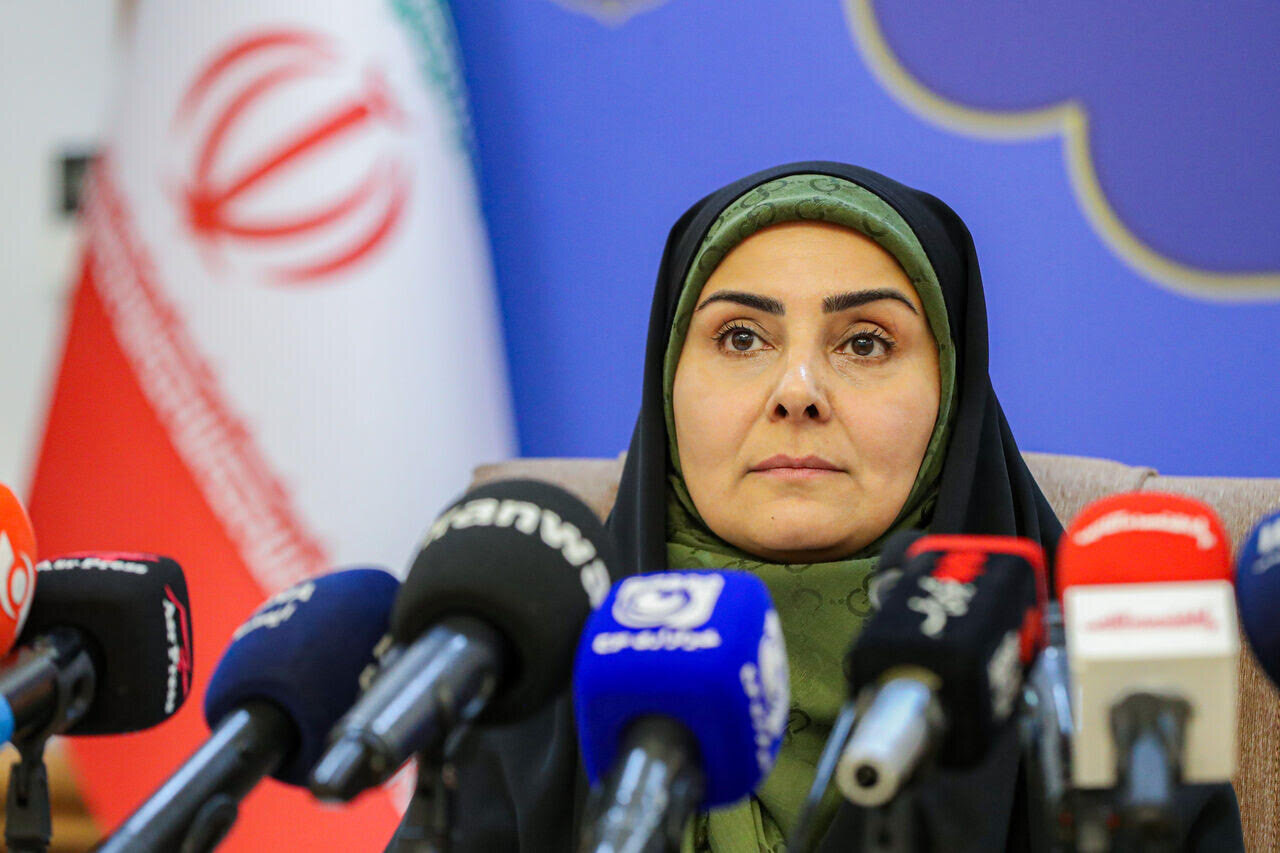
TEHRAN- In a comprehensive press conference, Minister of Transport and Urban Development Farzaneh Sadegh detailed the resilience of Iran's transportation infrastructure during recent wartime crises, announced the neutralization of enemy plans to block transit routes, and outlined the government's housing agenda.
Minister Sadegh explained that during the 12-day and 40-day wars, and the subsequent siege with continuous nightly attacks, the enemy's primary objective was not merely damaging bridges, roads, ports, and airports, but undermining "people's resilience" by striking water, electricity, and vital infrastructure. The ministry, with the support of the President and First Vice President, implemented key measures to prevent widespread disruption in the country's logistics chain.
A Cabinet resolution assigned the ministry the responsibility of chairing the "Task Force for Facilitating Cargo Clearance from Ports," coordinating all stakeholders to ensure essential goods reached all parts of the country swiftly. The private sector was directly involved in decision-making processes, significantly increasing the speed and quality of cargo clearance.
Despite the crisis, the country achieved new operational records. At southern ports, especially Imam Khomeini Port, cargo loading and unloading grew by over 100% compared to peacetime. At Chabahar Port, with maximum coordination, daily truck departures averaged over one thousand vehicles. The minister attributed this success to synergy between the decision-making headquarters, field managers, and cabinet members. Direct communication with provincial governors was maintained, and ministry deputies were present in the field nationwide to support local managers.
The minister elaborated on the "battlefield reconstruction" strategy, emphasizing that waiting until the crisis ended was impossible, as severing any link in the communications network would paralyze the entire logistics chain. With the dedication of contractors, engineers, workers, and field management, damaged road and rail infrastructure was reconstructed within hours or days, astonishing the international community.
During this period, more than 98 road points and 11 rail targets were struck. Analysis of the targets' geographical locations revealed the enemy had aimed for the west-to-east transit corridor connecting Europe to China. Strategic routes from Marand and Mianeh to Tehran, Qom, and Sistan were attacked to halt imports, exports, and transit, but Iran's resilient logistics network thwarted this conspiracy.
Damage assessments revealed that more than 400 cities and villages in 25 provinces were targeted, with over 100,000 residential and commercial units damaged at various levels. More than 1,200 minor repairs were also carried out.
Drawing on reconstruction experiences, especially in Tehran, meetings were quickly convened to approve rental and housing deposits for affected families. Over 2,500 housing deposits have been paid in the shortest possible time. Special approvals were also passed for Kermanshah and Bandar Abbas due to their specific conditions. The government's policy is to center reconstruction around the people themselves, with the government providing resources. More than 300 to 350 units have received reconstruction permits.
Despite damaged aviation infrastructure, the transport of Arbaeen pilgrims was successfully carried out. Iran Air accomplished this mission with only eight aircraft in a short period. On the day of bidding farewell to the martyred leader, more than 50 takeoffs and landings were performed at Mehrabad Airport without radar, and 98 high-level delegations arrived at Imam Khomeini Airport. During this year's Arbaeen, road transport of pilgrims grew by over 10% compared to last year, with more than 70% of national capacity utilized. Over 2,000 buses from the private fleet were deployed to support the pilgrims.
The minister stated that the 14th government's entire effort is to move from "housing on paper" to "actual residency." The rental housing plan has been seriously initiated, with registration for about 5,000 units beginning during Government Week. Young couples are a priority, and resources will be provided from organizational housing and other existing properties.
Attention is also being given to workers' housing and housing for the underprivileged. Memorandums of understanding with the Ministry of Labor and other bodies have brought these matters into the implementation phase. Land supply through cooperation with the Housing Foundation and the National Land and Housing Organization, along with capacities from institutions like the Mostazafan Foundation, the Execution of Imam Khomeini's Order, the Imam Khomeini Relief Committee, and loans for villagers and residents of cities under 25,000, are among the measures.
The minister identified land supply and preparation costs as the most significant challenge. In some sites, preparation costs are several times construction costs. In western provinces, due to a lack of suitable land, annexing difficult terrains with high infrastructure costs was necessary. Inflation also places additional pressure on public housing projects. Solutions include prioritizing income deciles, allocating interest-free loans to lower deciles, bartering land with contractors, using government lands, adjusting contractor costs, and increasing banking facilities.
Of the total 850,000 registered units, about 100,000 were on the agenda, with 80,000 progressing over the past two years. More than 300,000 units in this government have received loans to applicants who paid their contribution. Over 350,000 building permits out of the total 850,000 units have been issued in this government.
The minister also praised the courageous role of truck drivers who, despite difficult long routes, especially the Chabahar route, delivered cargo across the country and created a commendable epic.
The Minister, expressing gratitude for the role of drivers during critical conditions, said: "During the 12-day war, we witnessed the sacrifice of drivers; dear individuals who, contrary to the margins and protests before the war, appeared on the scene with record-breaking performance and showed that their hearts beat for the homeland."
She added: "In appreciation of these efforts, in collaboration with the Executive Vice President, a special package has been prepared focusing on fleet modernization, energy consumption optimization, and replacement plans for old trucks, which will soon be implemented using the legal capacities of the Optimization Organization."
Regarding the organization of driver insurance and the entry of trucks, Sadegh stated: "With the efforts of the Social and Civil Committees of the Parliament, the final stages of the driver insurance bill are being completed with the consultation of the guilds and organized unions in this field, and the entry of undocumented trucks is also being reviewed and managed for market regulation and supporting drivers' livelihoods."
Regarding the smartization of the logistics industry, she said: "In the field of large-scale smart company activities, we have joint meetings with economic institutions to reach a fair outcome while complying with regulations, in which freight distribution, regardless of being local or non-local, is carried out fairly among all drivers across the country."
EF/MA
Leave a Comment